Environmental Education Field Trips
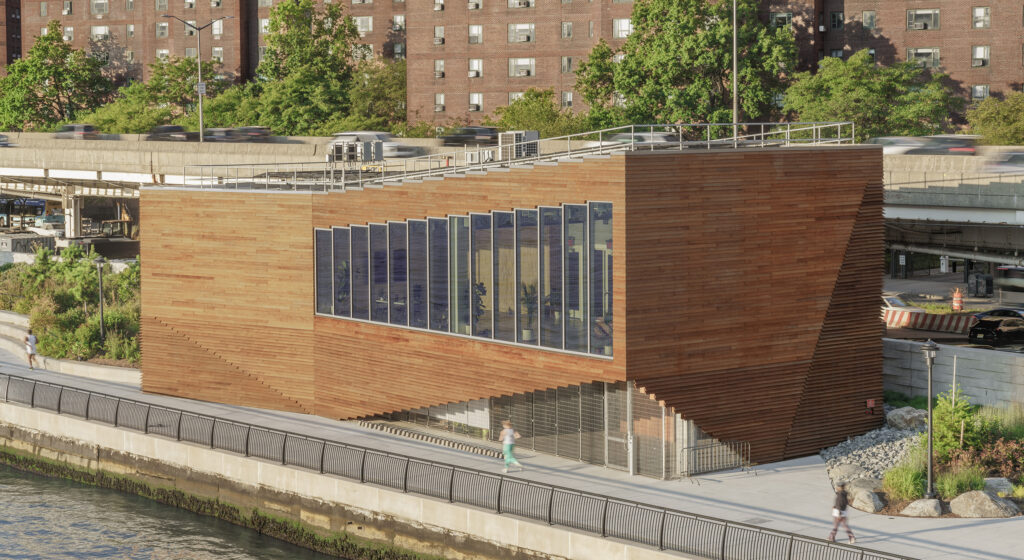
Bring your students to the new Solar One Environmental Education Center. Located along the East River, our state-of-the-art building is both a classroom and a teaching tool, demonstrating real-world solutions in renewable energy and sustainability. It’s the perfect location for engaging field trips for students from 3rd through 12th grades.
Our field trips offer hands-on STEM experiences that connect students to topics like solar power, wind energy, energy storage, and resilient design. Through interactive projects, students explore how science, engineering, and environmental stewardship can help build a more sustainable future.
About the Solar One Environmental Education Center
The Solar One Environmental Education Center, a transformative hub for climate action and community engagement, is dedicated to providing innovative environmental education and hands-on experiences in renewable energy, ecology, and sustainability. Located in a prime urban space near the East River, the center serves as both a resilience educational resource and a community catalyst, inspiring action on climate change while fostering a deeper connection to the natural world.
Field Trip Details
- Programs available for grades 3–12
- Maximum group size: 30 students
- 1 adult chaperone required per 10 students
- Field trips are ~90 minutes and take place at the Solar One Environmental Education Center in Manhattan
Field Trip Programs
Fun with Solar Circuits
Grades 3 – 5
Field Trip Description
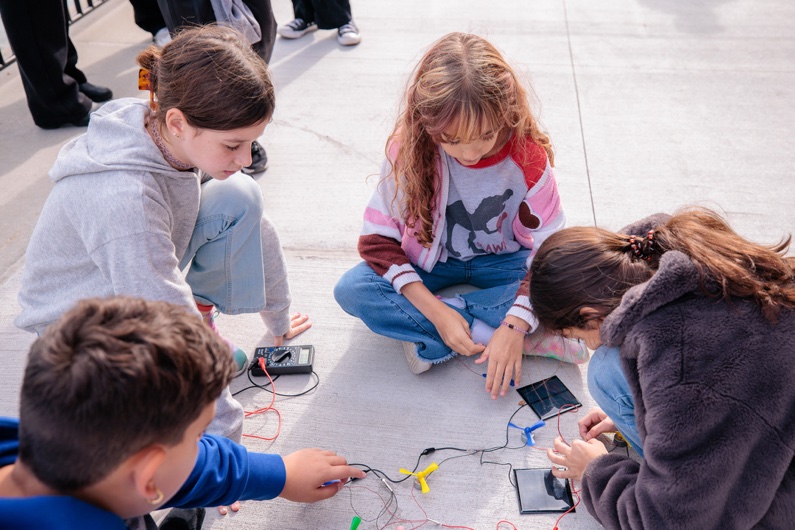
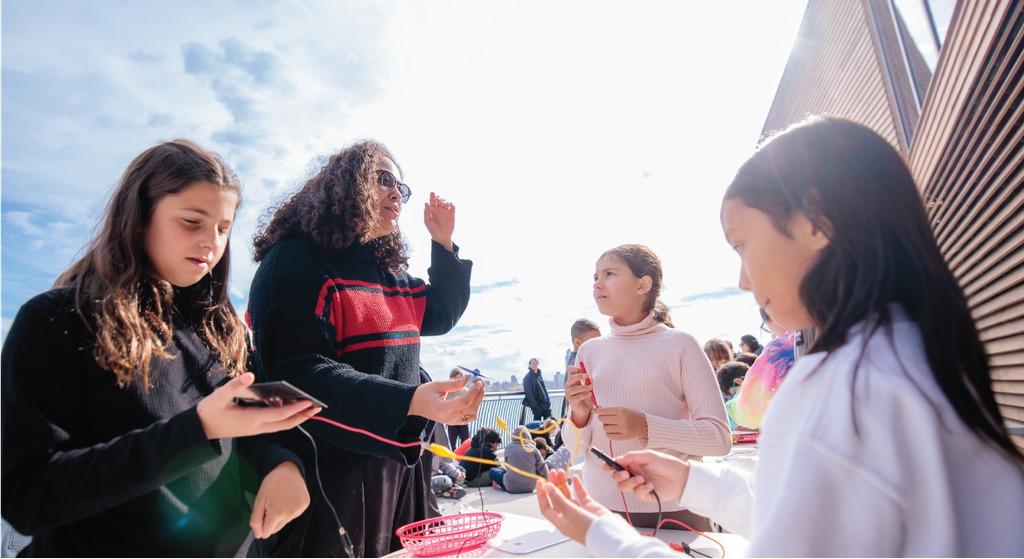
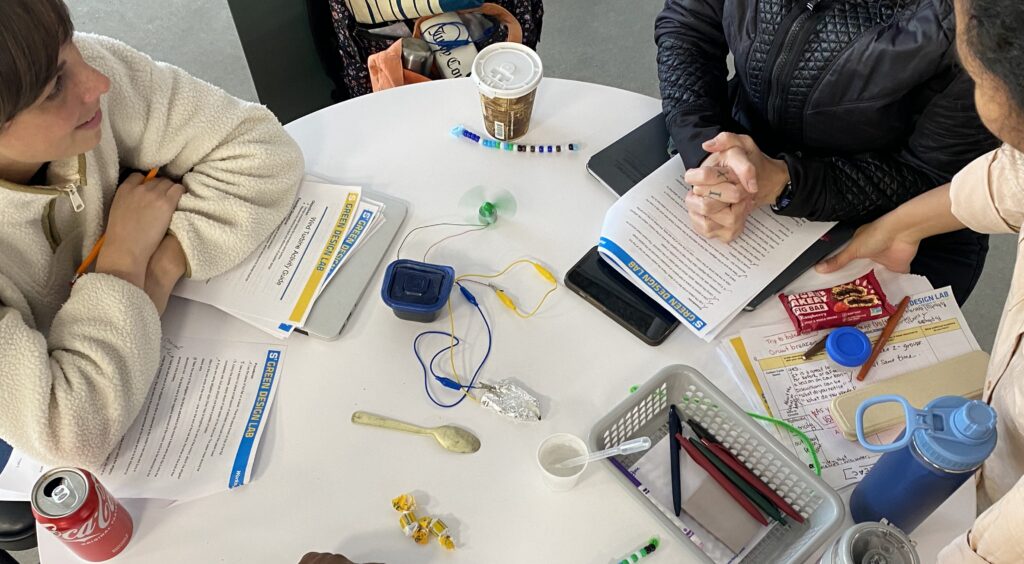
A hands-on exploration of solar energy and electric circuits for young engineers. Students use mini solar panels to power a motorized fan and investigate how shade and angles affect solar energy production. Along the way, they learn the components of a simple circuit and discover how sunlight is transformed into electricity.
Subjects Covered
science, engineering, climate, sustainability
Grades
3, 4, 5
Capacity
30 stu., Min 3 chap.
Activity
field trip
Duration
90 min.
Water Ecology
Grades 3 – Adult
Field Trip Description
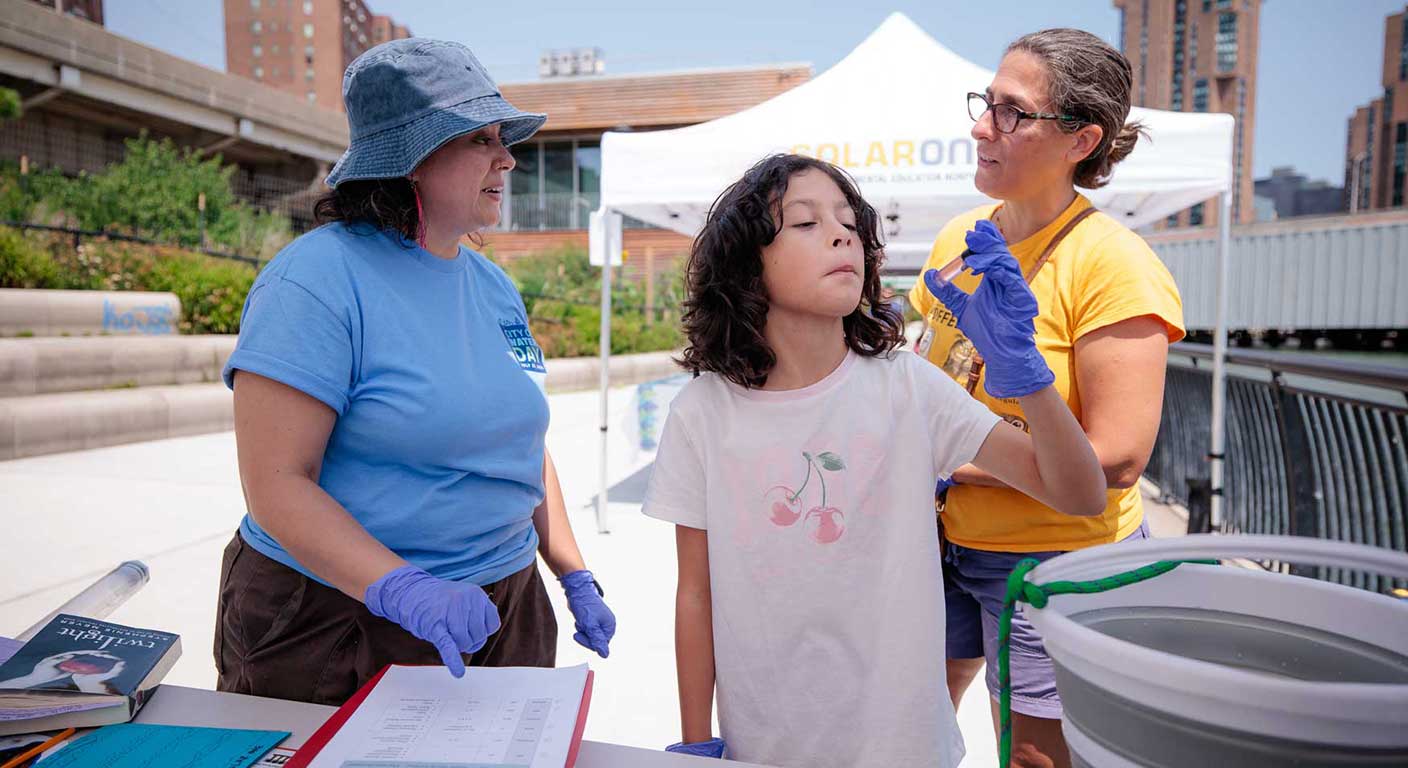
ELEMENTARY: Explore the East River and discover what its water can tell us about the health of the ecosystem. Students investigate the river through hands-on observation and community science, collecting samples and exploring the plants, animals, and environmental conditions that make up this urban ecosystem. Along the way, they learn about the East River’s history and consider how people and a changing climate can affect the health of our waterways.
MIDDLE SCHOOL: Students investigate the East River ecosystem through hands-on observation, water quality testing, and community science. They collect and examine samples from the river and use their observations and data to explore the conditions that support life in an urban estuary. Students also learn about the East River’s history and human uses while considering how human activity and a changing climate can shape the health and resilience of our waterways.
HIGH SCHOOL: Students explore the East River as an urban estuary through hands-on community science and environmental investigation. They collect and analyze samples, make field observations, and use real data to investigate the factors that influence ecosystem health. Students connect their findings to the East River’s history and human uses and consider how climate change and human activity are shaping the future of urban waterways.
Subjects Covered
science, ecosystems, weather and climate, water testing, climate, sustainability
Grades
3, 4, 5, 6, 7, 8, 9, 10, 11, 12, adult
Capacity
30 stu.
Activity
field trip
Duration
90 min.
Green Building Design
Grades 3 – 12
Field Trip Description
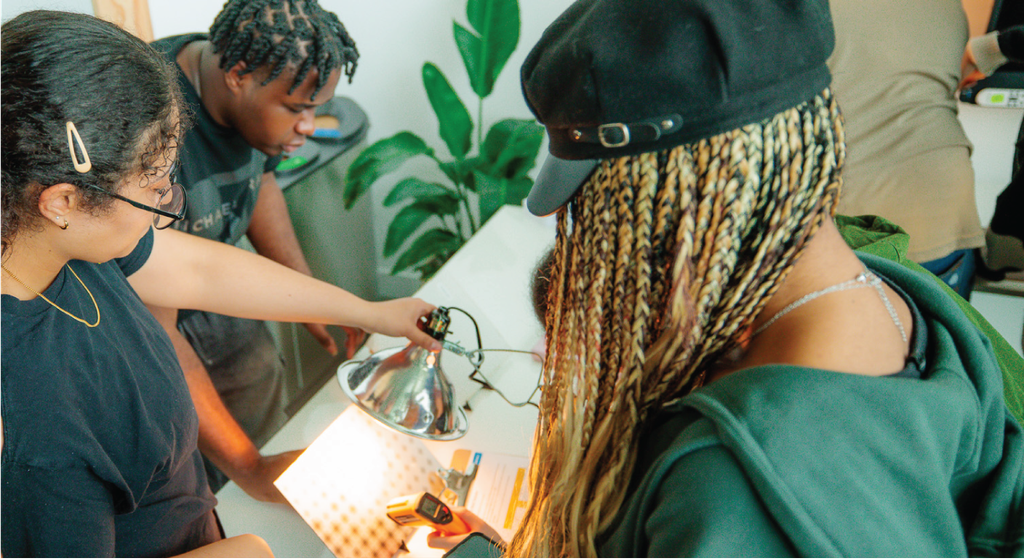
ELEMENTARY: What makes a building green, and how can design help us prepare for a changing climate? Students explore our green building and Stuyvesant Cove Park to discover how design can help conserve energy, use renewable resources, and protect communities from climate impacts. They investigate green building features, explore the park’s flood protection infrastructure, and then build and test a small solar-powered house prototype. Along the way, students see how climate solutions can be built into the places where we live, work, and play.
MIDDLE SCHOOL: Students explore how buildings and public spaces can be designed to create a more sustainable and climate-resilient city. They investigate green building features throughout our center and Stuyvesant Cove Park, including renewable energy systems and the flood protection infrastructure that is part of New York City’s larger climate resilience efforts. Through hands-on design activities, students explore how buildings can reduce environmental impacts while helping communities adapt to a changing climate.
HIGH SCHOOL: Students explore how design can help create a more sustainable and climate-resilient future. They investigate our green building and Stuyvesant Cove Park, looking at strategies for both climate mitigation and adaptation, from renewable energy systems to flood protection infrastructure. Students then build and test a small solar-powered house prototype before taking on a green building design challenge. Working with a budget and a specific building purpose, they select design elements across different LEED categories, weighing the cost and environmental benefits of each choice to see how their decisions affect their building’s potential LEED certification level.
Subjects Covered
science, climate, sustainability, design thinking, city planning
Grades
3, 4, 5, 6, 7, 8, 9, 10, 11, 12
Capacity
30 stu.
Activity
field trip
Duration
90 min.
Solar Site Assessment
Grades 9 – 12
Field Trip Description
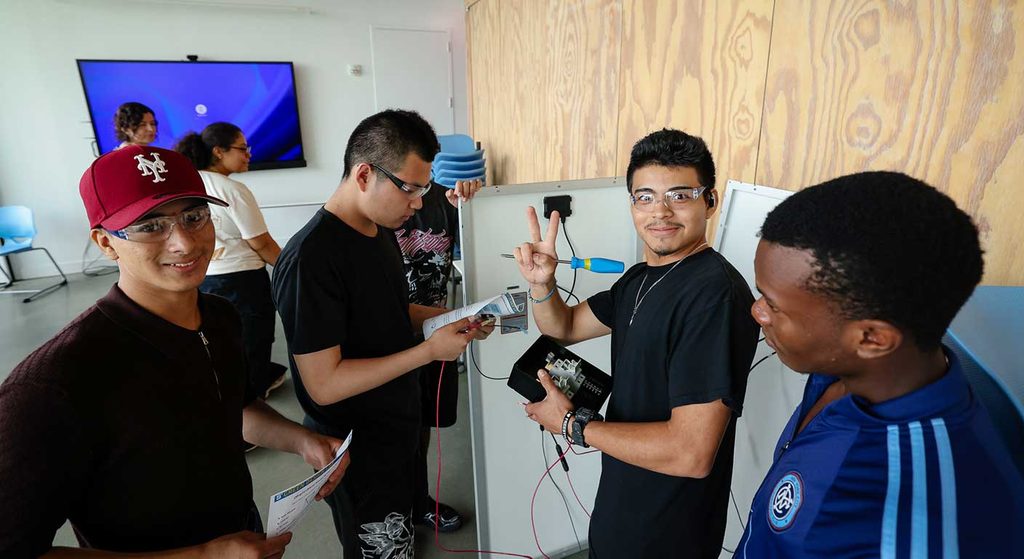
In this 2 hour workshop, students will conduct a solar site assessment in Stuyvesant Cove Park. Using a solar pathfinder, students will learn how to measure annual solar availability and simulate how solar engineers determine which locations are viable for solar installations. Please note this offering is weather dependent.
Subjects Covered
engineering, climate, sustainability, cte
Grades
9, 10, 11, 12
Capacity
30 stu.
Activity
field trip
Duration
120 min.
Energy Storage & Resilience
Grades 3 – 12
Field Trip Description
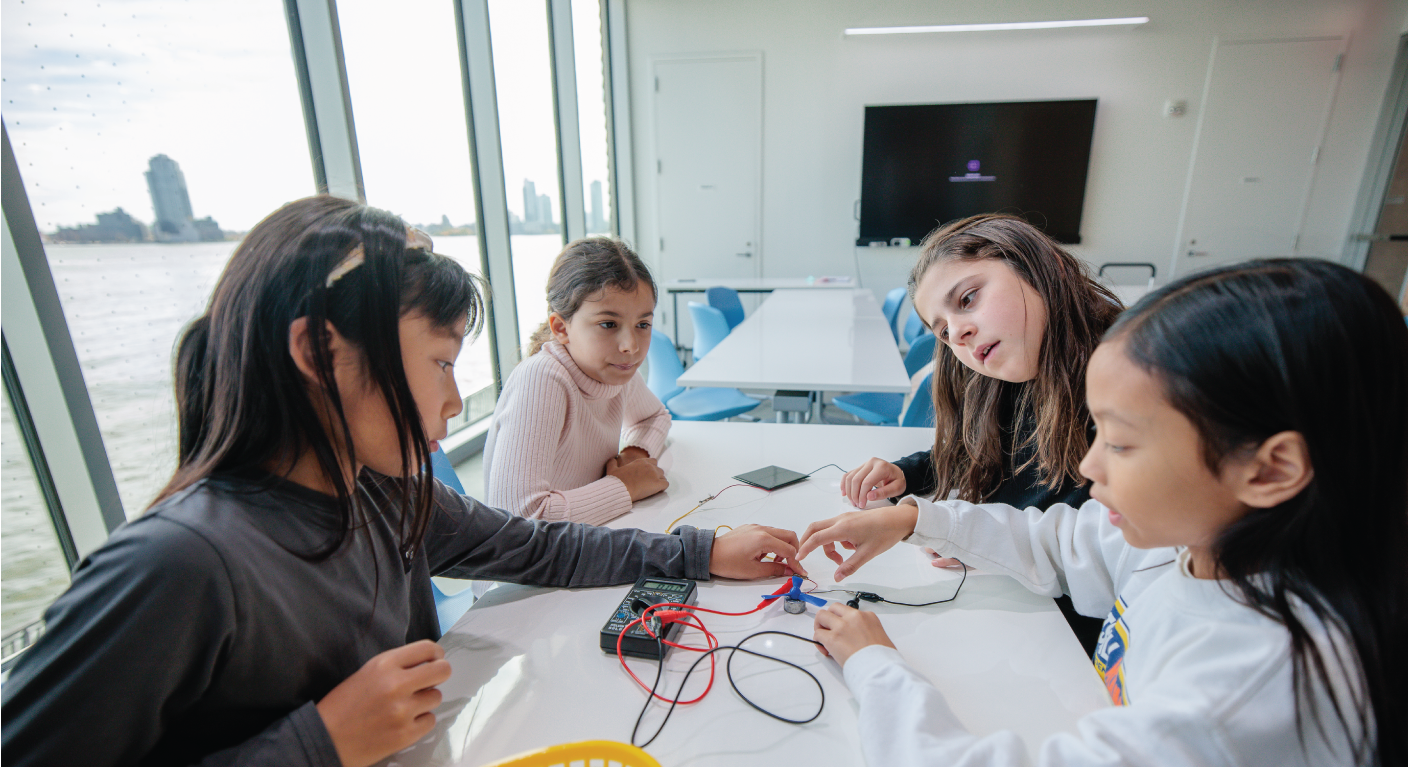
ELEMENTARY: Students explore how batteries store and deliver energy by building their own working batteries using household materials. They’ll learn about the parts of a battery and how chemical energy can be transformed into electricity to power a small motor fan. Along the way, they’ll begin to understand how batteries can support solar and wind energy when the sun isn’t shining or the wind isn’t blowing.
MIDDLE SCHOOL: Students dive into the science of batteries by building their own from everyday materials and using them to power a motor fan. As they explore how chemical energy becomes electrical energy, they examine the components of a working battery and how energy moves through a circuit. They also consider the role of batteries in renewable energy systems and why energy storage is key to building a more resilient, sustainable future.
HIGH SCHOOL: Students explore how batteries store and deliver energy by building functional batteries from household materials and using them to power a motor fan. They investigate how chemical reactions produce electric current, analyze the flow of energy through a circuit, and reflect on how storage technologies like batteries support solar and wind energy in real-world systems. This hands-on activity connects energy transformation to the challenges of building a resilient and sustainable grid.
Subjects Covered
science, engineering, the scientific method, climate, sustainability
Grades
3, 4, 5, 6, 7, 8, 9, 10, 11, 12
Capacity
30 stu.
Activity
field trip
Duration
90 min.
Off-Grid Solar Installation
Grades 9 – 12
Field Trip Description
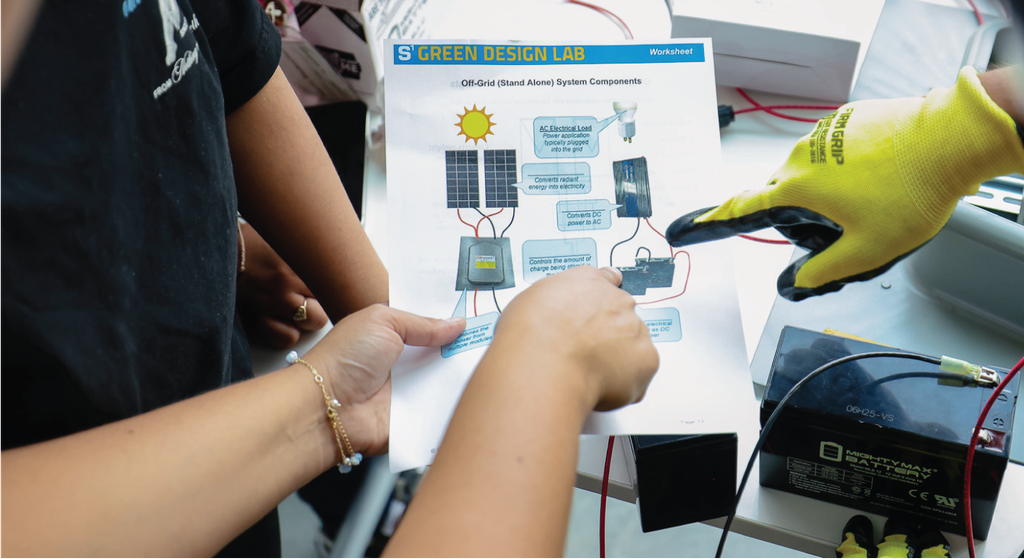
In this 2 hour workshop, students will experience what it’s like to be a solar installer by exploring electrical circuitry design and hands-on construction skills through an off-grid solar installation
Subjects Covered
engineering, technology, climate, sustainability, cte
Grades
9, 10, 11, 12
Capacity
30 stu.
Activity
field trip
Duration
120 min.
Spin to the Future
Grades 3 – 12
Field Trip Description
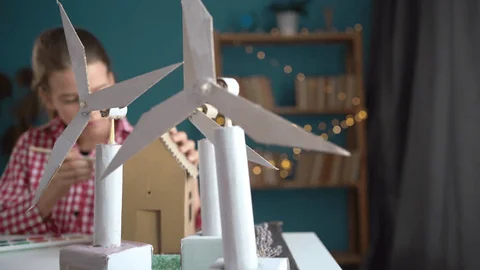
ELEMENTARY: A hands-on wind energy design challenge for young engineers. Students design and test their own wind turbine blades, while experimenting with shapes and angles to make them spin faster and measuring how much voltage their turbines generate. Along the way, they discover how wind can be turned into electricity and how renewable energy can be part of our collective future.
MIDDLE SCHOOL: Through a hands-on design challenge, students explore how wind energy works by building and testing their own turbine blades. They measure how much electricity their turbines generate with and analyze how blade shape affects performance. As they test and improve their designs, students apply real-world science and engineering skills like energy transfer and data analysis.
HIGH SCHOOL: In this engineering-focused workshop, students design wind turbine blades that convert kinetic energy into electricity. They measure voltage and current data with multimeters to calculate wattage and refine their designs for better performance. Along the way, they apply key science and engineering practices as they test variables, analyze data, and explore how renewable energy systems can solve real-world problems.
Subjects Covered
science, engineering, the scientific method, climate, sustainability, design thinking
Grades
3, 4, 5, 6, 7, 8, 9, 10, 11, 12
Capacity
30 stu.
Activity
field trip
Duration
90 min.
Solar Field Study
Grades 6 – 12
Field Trip Description
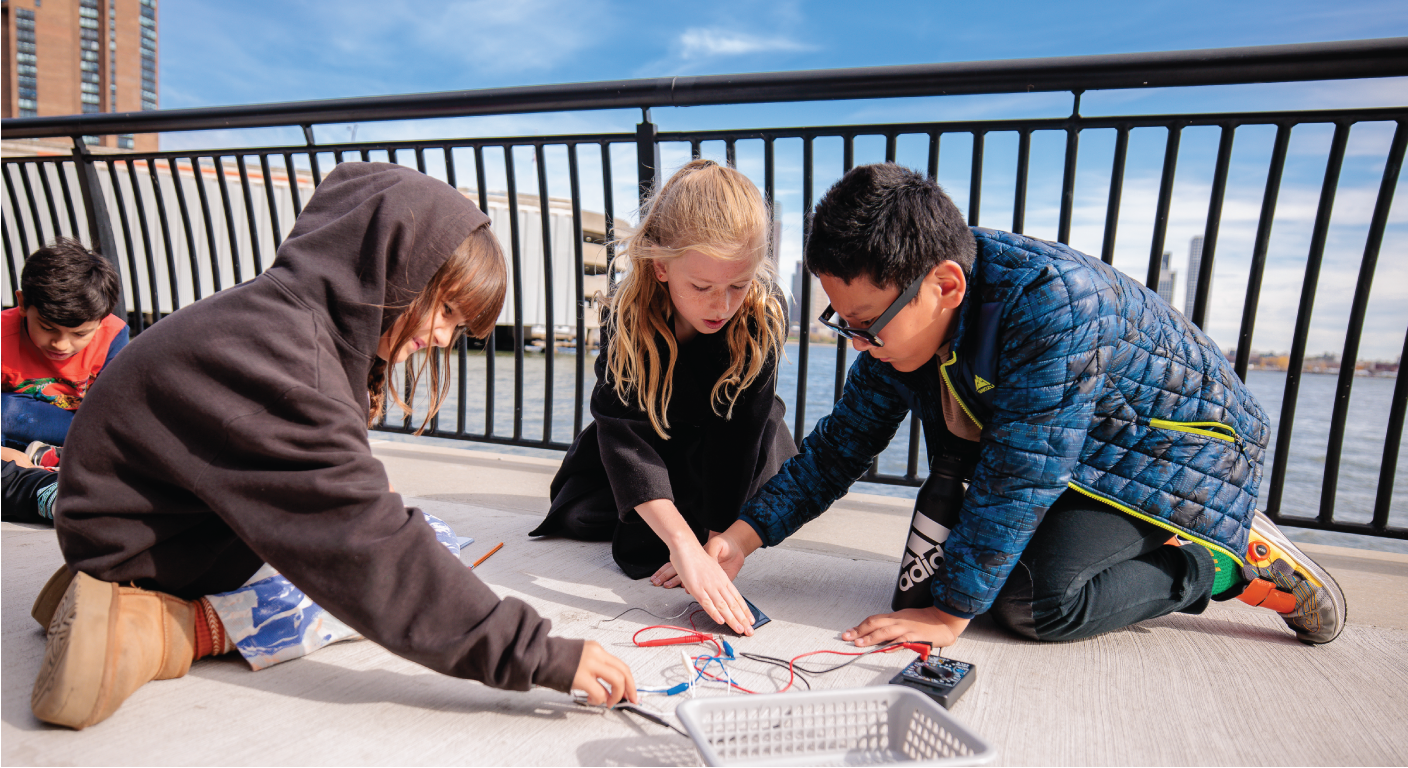
MIDDLE SCHOOL: A hands-on investigation of solar energy, circuits, and design variables. Students use mini solar panels to power motorized fans and test how sunlight, shade, and panel angles affect energy output. Through guided experimentation, they analyze how different conditions influence power generation and deepen their understanding of circuits, renewable energy, and the science behind solar technology.
HIGH SCHOOL: An exploration of solar energy and system performance. Students use mini solar panels to power motorized fans and investigate how angle and shade affect energy output. Using multimeters, they measure voltage in parallel and current in series, then calculate how many watts their setup generates. They interpret their results to explore energy efficiency, system design, and the role of solar technology in a sustainable future.
Subjects Covered
math, measurement & data, science, engineering, climate, sustainability
Grades
6, 7, 8, 9, 10, 11, 12
Capacity
30 stu.
Activity
field trip
Duration
90 min.
Create Your Own
Grades 3 – 12
Field Trip Description
Come explore our brand-new education center! If you can’t find exactly what you’re looking for, we’ll work with you to design the perfect program and schedule for your group.
Subjects Covered
measurement & data, science, ecosystems, engineering, climate, sustainability
Grades
3, 4, 5, 6, 7, 8, 9, 10, 11, 12
Capacity
30 stu.
Activity
field trip
Duration
90 min.
Our Field Trips Featured on PBS
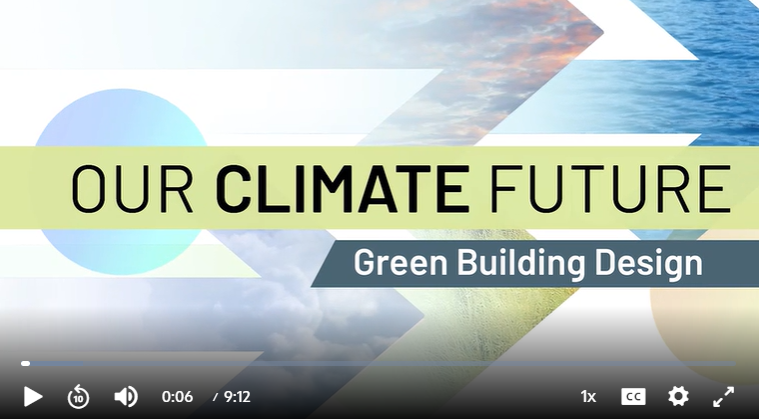
The PBS series “Our Climate Future” recently featured student field trips at our Environmental Education Center. Just click the image below to watch the video.
Contact us
800 FDR Dr Service Rd East
New York, NY 10010
Phone: 212.505.6050 ext. 107
Email: s1eec@solar1.org